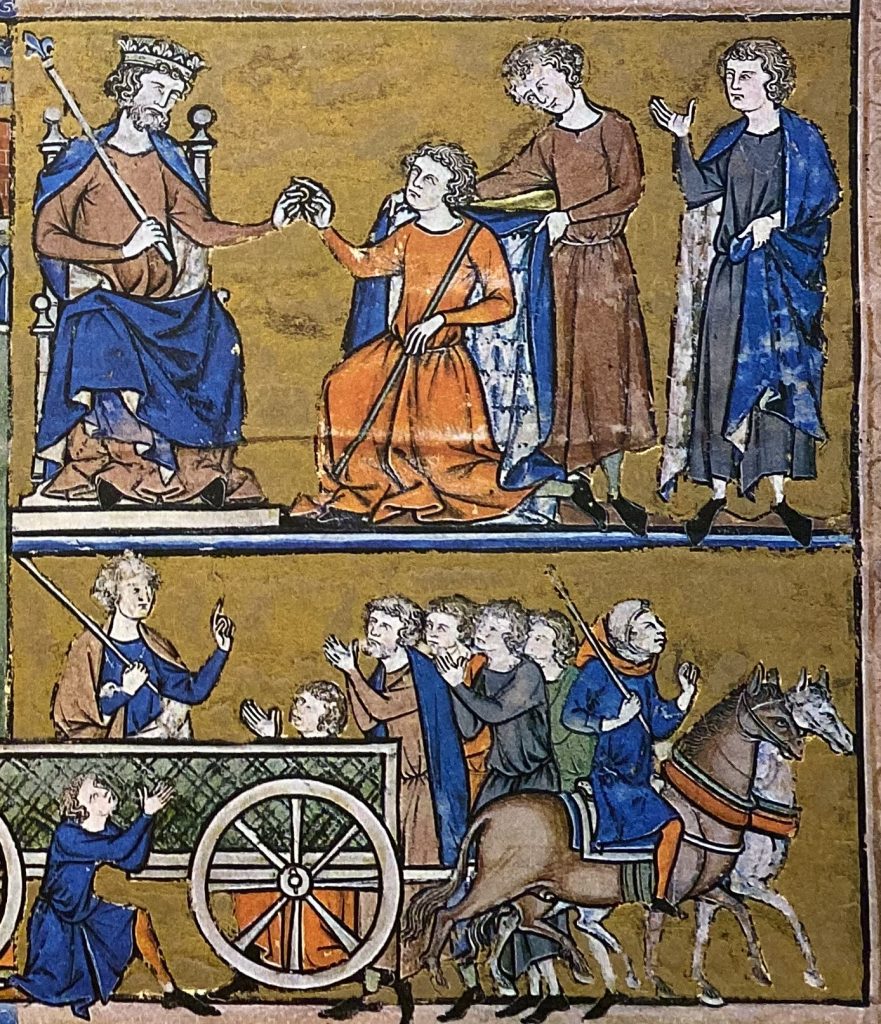
“Could we find another like him,” Pharaoh asked his servants, “a man so endowed with the spirit of God?” So Pharaoh said to Joseph: “Since God has made all this known to you, there is no one as discerning and wise as you are. You shall be in charge of my household, and all my people will obey your command. Only in respect to the throne will I outrank you.” Then Pharaoh said to Joseph, “Look, I put you in charge of the whole land of Egypt.” With that, Pharaoh took off his signet ring and put it on Joseph’s finger. He dressed him in robes of fine linen and put a gold chain around his neck. He then had him ride in his second chariot, and they shouted “Abrek!” before him. Genesis 41:39-43

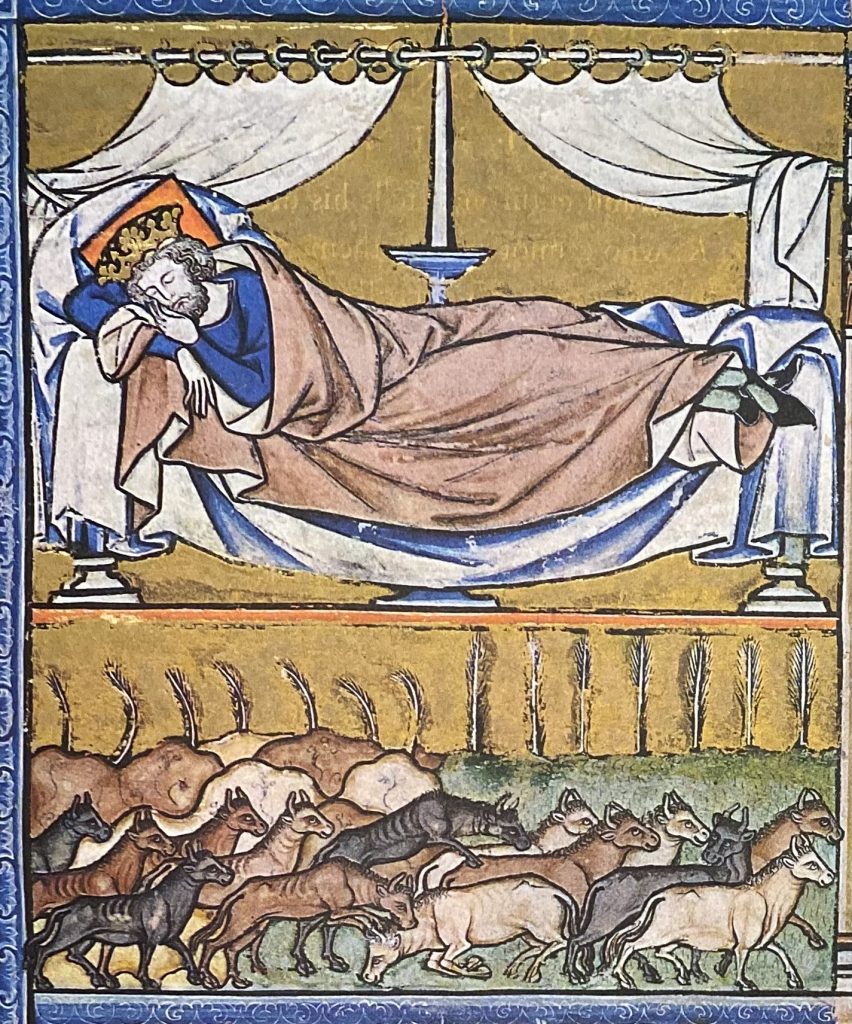
Pharaoh assumes at first that Joseph is just another magician, or another religious man. We know this by the assumption in his greeting “I have heard it said of you that when you hear a dream you can interpret it” (Gen. 41:15). The assumption is that Joseph is a man of power. Joseph immediately corrects the Egyptian deity and responds, “It is not I; God will give Pharaoh a favorable answer” (Cf. Gen. 41:16 with Daniel’s response in Dan. 2:27f). This is much more than a pious, or even a proper religious, response. Joseph is revealing the nature of his spirituality and unlocks the secret of true mysticism. Spirituality is not becoming something, but becoming nothing. Joseph learned this in his dungeons, and this elusive truth was perfected in his soul during his dark night. Spirituality is not the filling of the “me,” but the emptying of the “me.” In the holy chambers of the mystic’s heart, there is no room for the ego; the first person pronoun is all gone. Spirituality is not gaining power, but being absolutely powerless. It is becoming deeply familiar with the fact that one is really poor in spirit, that one has nothing at all to lie on the table. What made Joseph so great as he towers above all his other religious rivals is his nothingness; he could not have stood before Pharaoh barer if he was completely naked.
We imagine Joseph in the great hall of the Pharaoh. He had no resources of his own to meet the challenge ahead. In this way he was completely different from the magicians standing off to the side waiting to see what would come of this Hebrew dungeon rat. Many years later, Moses would stand in the same place. Later still, far off in Babylon, Daniel would join them, sharing situations. These were numinous men of the Spirit, metaphysicians par excellence. We should not think of them engaged in a grand magic contest, sparing power for power against the magicians. These men of God and the magician guild existed on completely different levels. These Hebrews were empty of their own agendas so as to be possessed by the Power Source. They were directly linked to God. The magicians’ power was derived, acquired by the manipulation of powers allowed to them for the purposes of Him who determines all things. They soon sensed this and had to bow out of the picture, mere foils for the Almighty to display His own greatness before the world.
Joseph, therefore, emerges out from the night into the dawn of the enlightened. “Enlightenment” is a term that describes the stage in the mystic’s progress where one can penetrate into reality, and see what others do not see, and know what others do not know. In itself, this stage may be good or bad, depending what the motive is for pursuing such things. Magic, in as far as it goes, is a sort of “enlightenment.” For Joseph enlightenment meant achieving a most holy state whereby he had insight into the nature of his environment that could not be reached by natural reason or observation, all for the glory of God. No doubt he showed evidence of enlightenment before in Potiphar’s house, and in the dungeon where he rose to the top, and could even interpret dreams.
When Joseph emerges out of his night, he is a different man. This fact is most noticeable in the dialogue between him and Pharaoh. Those who make it their business to understand grammar and biblical discourse notice how unusual it is for Pharaoh to banter back and forth in extended dialogue with another: “And Pharaoh said to Joseph … And Joseph responded to Pharaoh … And Pharaoh spoke to Joseph … And Joseph said to Pharaoh.” This indicates that the narrator regards the speaker and the addressee on equal status. For the ancient, this would elevate Joseph to a divine level, for Pharaoh was a god. Of course, the Hebrew narrator would not think so highly of Pharaoh. Still, he wishes to use this dialogue to emphasize how Joseph appeared in Pharaoh’s court; he was extra-ordinary in a godlike way. We will discuss the concept of deification in a later post. Here we will assert that Joseph was enlightened, to say the least, and perhaps at this time so deeply in union with God that he seemed divine to those who beheld him.
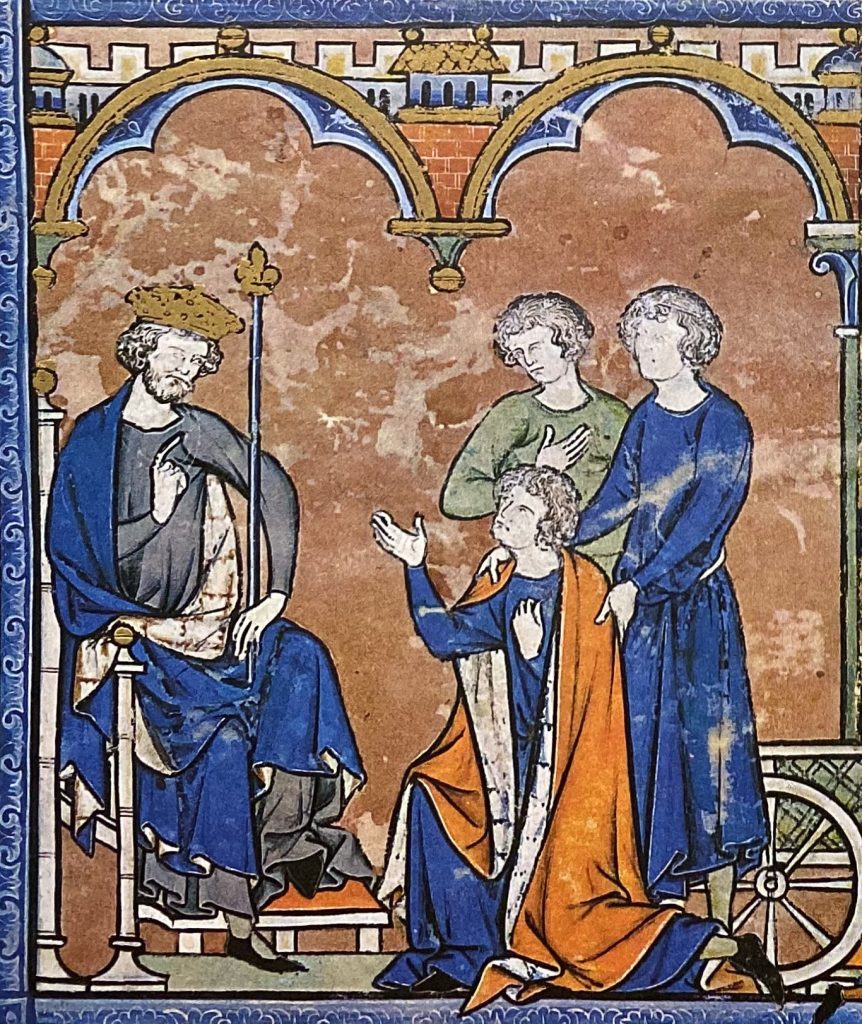
Along these lines, we must add that Joseph functioned in the land as a god in the eyes of the people of Egypt. The central Egyptian deity of vegetation was Osiris, the god who died annually and rose again each year in the spring bringing forth fertility. Joseph becomes a personification of this god in that he now becomes the great grain provider for the peoples. With deep spiritual insight comes great responsibility. With an almost reckless boldness, Joseph urged Pharaoh into action without being asked his opinion. Pharaoh could only acquiesce to this mysterious man, eventually putting him in charge of the whole nation. True, pure mysticism always has practical results. The head is in the clouds, but the feet are on the ground. So it was with Joseph, the provider. As for his new position, Westermann tells us “The ancient rite of investiture is linked with installation. It consists of the giving of the ring, clothing with vestal garment, laying on of golden chain, and arranging for a chariot.” But St. Ambrose sees a mystical meaning here:
On this account I think that Joseph merited rewards that were more mystical, because he spoke concerning mystical things. For what is the meaning of the ring that was put on his finger? Only this, that we may understand that the pontificate of faith was bestowed on him so that he could himself seal others. What of the robe, which is the garment of wisdom? Only this, that preeminence in wisdom was granted to him by the king of heaven. The chain of gold appears to represent good understanding; the chariot too signifies the exalted height of merit.
On Joseph
Takeaway: Joseph emerges out from the night into the dawn of the enlightened, a stage in the mystic’s progress where one can penetrate into reality, and see what others do not see, and know what others do not know.
Questions: 1) Does “enlightenment” as described above seem too strange of an idea for your experience of Catholicism or Christianity? Explain. 2) Are you motivated by this story to advance deeper into an enlightened stage of consciousness?
Sources Used:
St. Ambrose On Joseph, in ACCS p. 268
Westermann, Claus. Genesis 37-50, p. 94.