Be careful to observe all my statutes and all my decrees; otherwise the land where I am bringing you to dwell will vomit you out. Leviticus 20:22
The structure of Chapters 18, 19, and 20 and their place in the middle of the Leviticus is of immense importance in understanding the meaning Leviticus conveys. The whole focus of Chapter 19, as we have seen, is on the ethics of justice, how we should treat others, encapsulated in the simple but profound concept of loving others as ourselves. Chapter 19, however, is hugged on both sides with Chapters 18 and 20, both of which condemn occult practices and sexual deviance. The implication is clear: sexual moral corruption is directly related to a pagan world view as well as to societal injustice toward others. It is all one package.
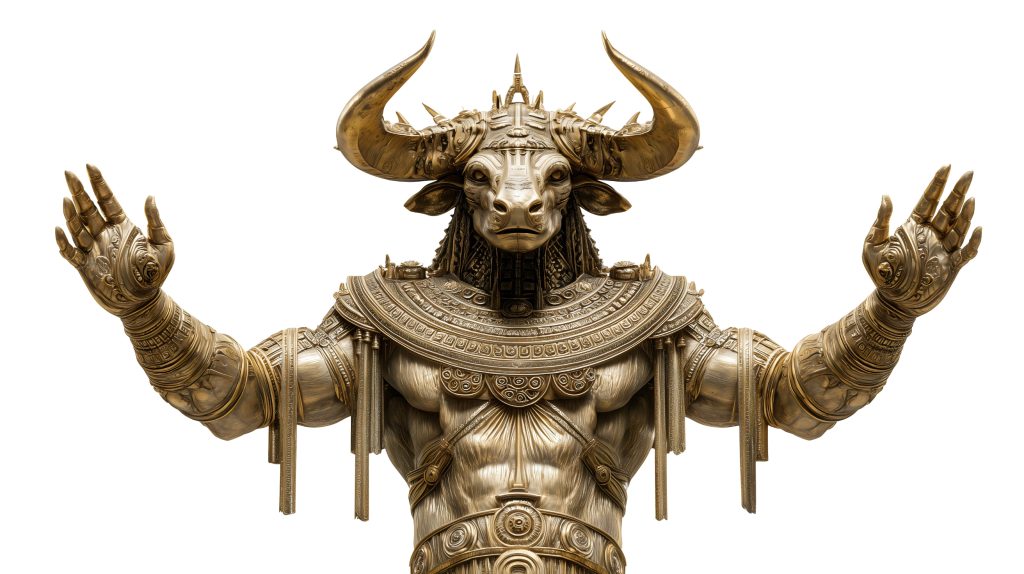
Chapter 20 begins with an emphatic condemnation of Molech worship. This picks up on 18:21 and expands upon it. Though much is unknown about the Molech cult, scholars seem to agree that he was a chthonic deity of the underworld, and therefore associated with ancestor worship, or the cult of the dead. It is also clear Molech demanded the sacrifice of children, perhaps for a promise of progeny. In some twisted, synchronistic way, this may have been done in the name of YHWH, thus “defiling my sanctuary and profaning my holy name” (20:3). The penalty is death (20:2), and if any (of his family) stand by and allow it, YHWH will set His face against them, and they shall be “cut off” (i.e., both executed and their progeny extinguished). Idolatry is, in fact, adultery, a “harlotry” against YHWH whose zeal and passion is set upon His people (20:5).
The text takes us directly from Molech to the occult practices of mediums and witches (20:6). Rather than turning to them, which brings the punishment of death, they are to consecrate themselves to YHWH by keeping His laws. This comes with the promise “I am YHWH who sanctify you” (20:8). Notice how this forms an “inclusio,” or “bookends,” concluding the chapter: “You shall be holy to me, for I YHWH am holy, and have separated you from the peoples, that you should be mine” (20:26). Then the emphatic conclusion comes: death to mediums and wizards by stoning. The occult world is diametrically opposite from YHWH and holiness, and it is YHWH and His holiness that the human heart is made for.
In between are another set of laws beginning with the fourth commandment presented in the negative: the cursing of one’s father (20:9), followed by a whole list of sexual sins paralleling Chapter 18. When we take all of this in, we see the whole thrust of this legislation is geared to protect Israel from attitudes and behaviors which corrupt life and the structure of the family. It is clear that sin undermines relationships, not only between God and humanity, but also within the family structure upon which a holy society must be built. Israel was to experience a return, so to speak, to the Garden in Eden, a “land flowing with milk and honey” (20:24), where the image of God was to be restored among the people, where God and man once again dwelt together in the peace of the Seventh Day of creation, and display to the world the holiness of YHWH.
This explains the severity of these laws. Should these moral boundaries be broken, the offending persons must suffer the consequences of capital punishment lest the contagion of sin and impurity spread throughout the land. If this happens, the land itself, personified as a living being, will get sick and vomit them out (cf. 18:25 with 20:22). This symbiosis of moral behavior and the land, the spiritual and the physical, is a fundamental fact of creation. The Garden in Eden could not sustain the presence of the fallen Adam and Eve. Cain polluted the land with his violent act of bloodshed, and became an alien to it. We saw it in Exodus where the Land of Egypt became sick with the plagues of God because of the hardness of Pharaoh’s heart. We see it today where immoral living always has physical consequences. Nature belongs to its Creator; it is “programmed” to respond according to His holy nature.
In western society, secular political ideologies have, for the most part, rejected the Judeo/Christian world-view founded upon these laws. However, they try to retain some sense of justice as presented in Chapter 19 while doing away with the sexual prohibitions, and becoming “neo-pagan” with regard to the occult. They make the erroneous assumption that sexual freedom, which is always accompanied with the pagan impulse, can co-exist with a “just” society. They do not sacrifice their children to Molech, but upon the altar of their own sexual freedom in abortion clinics. Let us repeat what was said above in the first paragraph, “sexual moral corruption is directly related to a pagan world view as well as to societal injustice toward others. It is all one package.” Modern social engineers are unable to create a just society because it is fundamental rebellion with God, the author of justice. The land is sick, and it is vomiting humanity out.
But the fulfillment of the mandate “You shall be holy to me; for I YHWH am holy, and have separated you from the peoples, that you should be mine” (20:26), makes everything around the people, even the ground they stand on, alive and fruitful. This is behind the promise in 18: 5, where it says, “You shall therefore keep my statues and ordinances, by doing which a man shall live; I am YHWH.” Life and holiness are inseparable. Holiness is not confined to the sanctuary where the Divine Presence, like at Sinai, is most terrifying and unapproachable. Here, as we see throughout the Holiness Code (Chapters 17-27), by living out these laws it “… is seen by mortal creatures that God is holy and hence known to be glorious” (Radner, p. 207). Worship radiates holiness out from the sanctuary into the whole of the land through obedience. This is even more true now for the Catholic Mass.
Takeaway: Moral impurity sickens the land; moral purity enlivens the land. Sexual morality cannot be separated from justice.
Questions:
- In modern contemporary society justice toward others is often separated from, and emphasized over, sexual morals. What is behind this? Do you agree? Disagree? Why?
- Again, in our secular culture sexual laws, especially homosexuality, are negated as obsolete. It is argued that other laws, like “boiling a little goat in its mother’s milk,” are no longer crimes; why should homosexuality be deemed wrong? What do you think? Do you agree? Disagree? Explain.
- Do you see evidence where moral corruption directly corrupts the physical world?
Sources Used:
The Anchor Bible Dictionary, article on “Molech,” vol. 4. New York: Doubleday, 1992, pp. 895ff.
Milgrom, J. Leviticus, pp. 246-259.
Radner, Leviticus, p. 207
Wenham, G. The Book of Leviticus, pp. 275 ff.