And God spoke all these words, saying… Exodus 20:1
Open my eyes, that I may behold, wondrous things out of your law. Psalm 119:18
Law is given in love; law is foundational to relationship. Law is a good and necessary thing; without it there is chaos. But how do we relate to Old Testament Law today as Christians? Theologians typically divide law into three categories: Moral, civil, and ceremonial. Moral, they say, is timeless and is applicable to all peoples at all times. The Ten Commandments would be an example of this. Civil law has to do with ancient Hebrew society as a Theocracy, and only its general principles offer us any relevance today (The so-called “Covenant Code in Exodus 21- 23 is an example of this). Finally, ceremonial has to do with the worship of the ancient Hebrew cult, and this was fulfilled in Christ (e.g. the laws in Leviticus). The outcome of this division, especially in Protestant, antinomian theology, is the narrow affirmation, for all practical purposes, of only the 10 commandments as applicable to us today in any meaningful way.

This division merely perpetuates deep feelings of alienation we have with the Law in our western society, feelings that many Catholics share with Protestants. The Hebrews knew nothing of this division, as is clear by the fact that they freely interspersed these different “types” of law together. If we were to categorize Hebrew law according to its “function and purpose in its own context,” we do better with this classification: Criminal, Case, Family, Cultic (sacrificial and symbolic), and Compassionate law. All these categories, though they tend to be found in general locations, are freely intermixed with each other (See Christopher Wright below).
With this background, we proceed to the Ten Commandments. In ancient Israel, these commandments would be understood in terms of what we would call “criminal law.” That is, those who broke one of these commandments would be considered criminals in their culture, and worthy of severe punishment. Just this statement itself reveals how far our culture, which is very lax in these matters, is removed from biblical culture. The commandments inspired both a deep pleasure and a terrifying fear in the hearts of biblical persons (Ps. 119:120 “My flesh trembles for fear of You, and I am afraid of Your judgments). Can the Law, God’s Holy Word, evoke such deep and varied responses in our own hearts? Or, have we shielded ourselves from the law by our superficial theological maxims that the law is practically meaningless for us today?
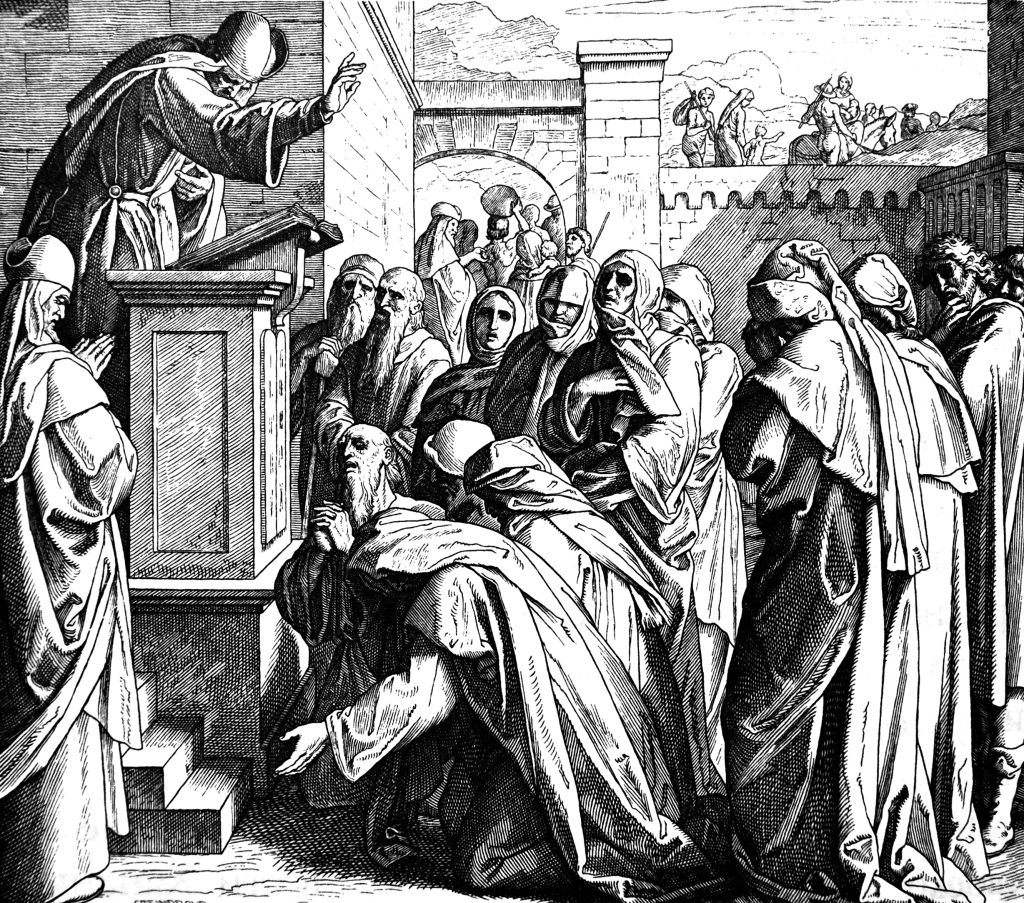
One such maxim is that we are now under grace, while the Israelites were under the law. But as we pointed out in our last post, the preamble of the Ten Commandments, “I am the Lord your God who brought you out of the land of Egypt, out of the house of bondage” (Exodus 20:2), presupposes the grace of redemption. Redemption is the whole context for the law. God did not come before Moses and the people, give them a law, and then tell them that if they get their act together, then He would save them from bondage and bring them to the Promised Land. Rather, God delivered them first, defeated their enemy, and then, out of a loving desire to enter into covenant and be in relationship with them, He showed them what kind of people they should be through law. In other words, He saved them by grace and then opened up to them the wonderful world of His own divine mind and thoughts, that is, His law! We see this same pattern in the Gospel. Jesus brought us out of Egypt (the world) delivered us from our bondage to sin, and then opened up to us all a whole new world of grace and responsibility.
The righteous under the Old covenant never performed the law so as to earn a place before God. They were given a place in God’s family by grace, and strove to please their Heavenly Father by obedience. True, as a nation, Israel failed in obedience. The difference in the New Testament is that we are “in Christ” and empowered to be everything the Old Testament Law envisioned a righteous person to be by the perfection of Jesus who works in us. Rather than being “under” the law, the law is “in us.” Therefore, there is far more unity between the Old and New Testaments than we think.
Finally, these “Ten Commandments” were generally understood by the rabbis to be a summation of all the laws scattered throughout the Pentateuch, or, from which all these laws emanate.
And God said to Moses, “Climb up the mountain to my presence and stay there and I will give you the stone tablets on which are intimated the rest of the words of Torah and the six hundred and thirteen laws commandments which I have written down t instruct them.”
Targum Pseudo-Jonathan Gen. 24:12.
Jesus says as much implicitly when the rich young ruler questions Him, “Good Teacher, what shall I do to inherit eternal life.” In response He refers him to the Ten Commandments.
Takeaway: Law is good; we need moral boundaries to relate with God and one another.
Questions: The prevailing attitude in our western culture since the Enlightenment is “antinomian,” that is, law is restricting and is no longer relevant. 1) What place does Old Testament law hold in your life? 2) Is law, and the idea of law, inspiring to you? Explain.
Resources Used:
Christopher Wright following Anthony Phillips’ categories in Old Testament Ethics for the People of God (Downers Grove, IL: IVP Academic, 2004), pp.288ff.
Kugel, J. The Bible as it Was, for rabbinical quote above, p. 3769f.