Be holy for I, YHWH your God, am holy. Leviticus 19:1
You are to distinguish between the holy and the common, and between the clean and the unclean. Leviticus 10:10
In our western culture the word “holy” has become a pejorative term. Once a sacred idea, it has lapsed into negative connotation, often trivialized, modifying nouns like “cow,” “mackerel,” and worse. There are “holy rollers,” and the “holier than thou,” deemed religious, but unattractive. Often holiness is thought of as “living by the rules,” the furthest thing from having fun. As we shall see, though holiness has a moral component to it, it is a far deeper and richer a concept than merely being well behaved. In fact, holiness is what everyone longs for, but very few know this to be the case.
The concept of holiness is fundamentally bonded to the “imago dei” motif. Humans are made in God’s image and therefore must be like Him so as to fulfill their destiny. “Holiness is intrinsic to God’s character” (Wenham, p. 22). Hence we have the solemn divine injunction “Be holy for I, YHWH your God, am holy” (Leviticus 19:1, cf. 11:44-45, 20:26). God is Holiness itself, and the only way we can possess it is by divine act and human action. As we said in our previous post about this book being vocational by its very name, God is the One who calls us to be holy, but we must answer this call. YHWH is the “Sanctifier” (Lev. 20:8, 21:8, 1`5, 23, 22:9, 16,32), but the main focus of Leviticus is what the Hebrews must do to achieve a state of holiness and how they must do it.
Having said this, the question remains, what is holiness anyway? Since God is Holiness itself, and God is indefinable by nature, we must start by understanding what holiness is not. Leviticus 10:10 is of help here where God commands the Hebrews “to distinguish between the holy and the common, and between the clean and the unclean.” It is important to understand that the “clean” is not parallel to holy, and the “common” is not parallel to the “unclean,” but that both the clean and the unclean are subsets of the common. It is the common that is most opposite to what holiness is, whether it be in a clean state of being, or an unclean state. God is absolutely “unique” and uncommon, and cannot come in contact with the common.

But what is the common? The common is the state of creation after the fall, everything outside the garden, nature that “groans” in anticipation of redemption. The common falls under two categories; the clean and the unclean. The clean is good in that it can and does reflect the glory of God, such as the beauties of nature, but it is still common. The unclean belongs to the “dark side” of the realm of the common, a pollution of what is clean. The unclean is further divided into what is temporarily unclean and what is permanently unclean. There is only one category of the unclean that was permanently so in ancient Israel, and this was unclean animals.
The whole of ancient Hebrew society revolved around the above distinctions. Everyone was aware that, by ritual and sacrifice, the common could be made holy, and vice versa, the holy could be profaned by human action, and the common “clean” could be polluted into an unclean state. The following chart diagrams these important concepts and how they relate:
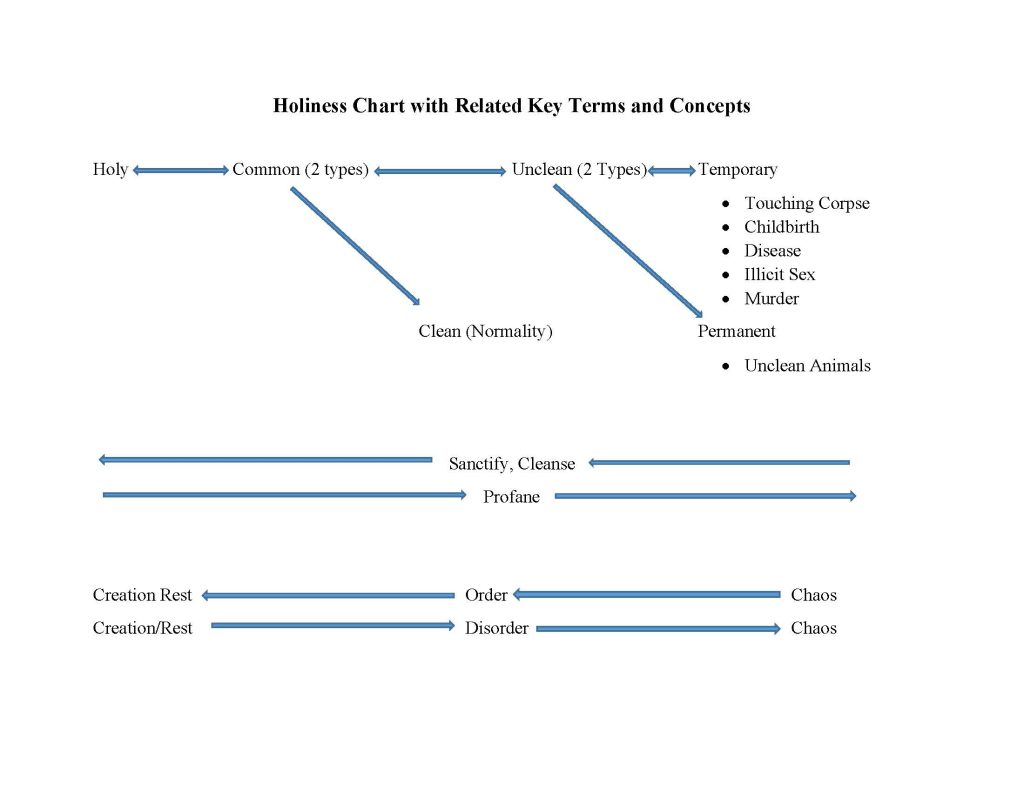
By nature, people and things are “common,” either in a clean state or an unclean state. Although clean is preferable to unclean, it is not a good place to be because the clean, the normal, is separated from God, who is Holy. Ritual observances and sacrifice, involving blood and water, are necessary to transfer one from the common to the holy. To understand and embrace this truth is to understand the book of Leviticus and everything one needs to know about Jesus Christ and salvation. Everything turns on holiness, or in our creation framework, the movement from chaos to order and to rest.
We see here God’s desire to create passion in His people Israel to achieve holiness, yes, even to experience the divine life as far as it can be achieved by mortal beings. Holiness is to be unique, separated from the common, the mundane, the banality of this fallen world. Behind this is that nagging realization that things are not what they are supposed to be. Holiness is the spiritual motion behind the human longing to be special, to make a difference, to have a purpose in life. It is a place where God desires to bring us to, but also demands a decisive response to this call.
Pure moral behavior is certainly a part of this call, as we have seen in the Ten Commandments and the Covenant Code back in our study of Exodus, and as we shall further see as we get into the Laws of Leviticus and Deuteronomy. An obedient attitude (faith) coupled with action (works) unites the soul to God and His holiness. But holiness is not a “safe” place for “nice” people who may seem to have it “all together.” As we have seen with Abraham with his encounter with God as He passed through the pieces of the sacrificial animals in a raging furnace, Jacob wrestling with God, and Moses entering the cloud of unknowing on the burning mountain, there is something terrifying about God (See Enigma and the Mysterium Tremendum under Jacob in Genesis). We have used the word “numinous” before to describe the Holy; it is that mysterious “something” both dreadful and inviting, the fascinating, unpredictable, uncanny, fearlessness before evil. When we read the Gospels closely, we see this numinous quality fully in Jesus; His disciples were never really “comfortable” around Him and were in a constant state of awe.
Holiness, therefore, is what we were made for and all long for. It is the uncommon, the extraordinary, the terrific, the exciting, the inspired, the creative, the lovely, the good, the true, and the beautiful. God is all these things and more. Those who dwell with Him experience these things, and to some degree reflect them in their own personas. We do not readily see this because the Devil has stolen the word “holy” from our culture, and has convinced us that the transient things of this world, and the gross gratification of the senses, is what we really want. It is our task here to restore the true meaning of the holy through our work in Leviticus.
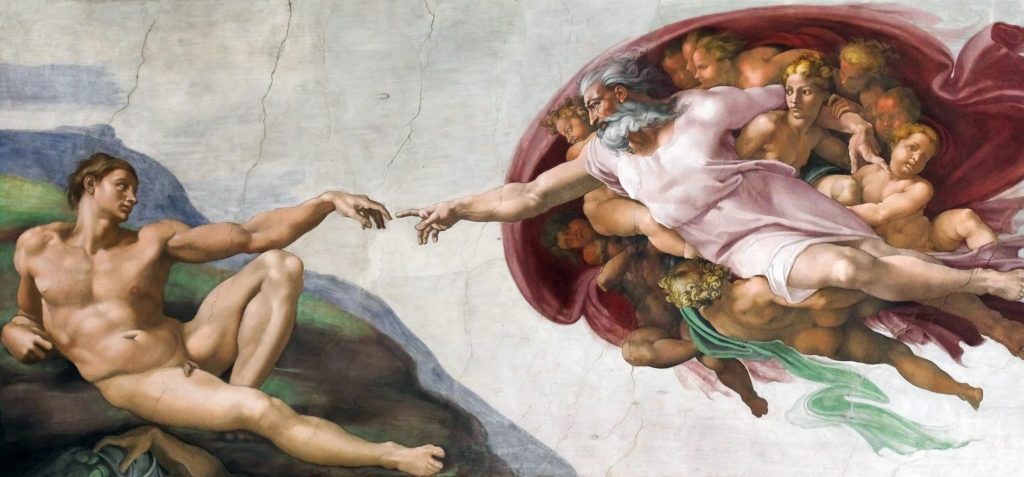
Takeaway: Holiness is not the pejorative term we make it out to be, but what humans naturally long for.
Questions:
- Before reading this post, what has been your understanding of the word “holy?”
- Does this post in any way enhance your longing for holiness? Explain.
Resources Used:
Otto, R. The Idea of the Holy.
Wenham, G. The Book of Leviticus. My chart in this post draws from Wenham’s chart and explanation on p. 19 in his wonderful commentary.