The Lord said to Moses: Speak to the Israelites and tell them: The following are the festivals of the Lord, which you shall declare holy days. Leviticus 23:1f.
One’s concept of time is fundamental to one’s cosmology, that is, the way we view our world and how we relate to it. For the Hebrew, time was linear in that it was created first with light in the context of a seven-day week; the progression of the days takes us to the goal of creation, working from chaos to order and finally to rest. This informed the Hebrew to understand time having a definite beginning and a purposeful end. Linear time can also be called “secular time:” the time of our day to day existence and activities, of birth, aging and finally death.
However, we see on Day Four of creation that God set in motion the sense of cyclical time with the creation of the sun, moon, and stars, specifically for the purpose of marking “signs and seasons.” The word translated “seasons” is the Hebrew mȏ‵adîm, often used in the context of religious festivals or meetings following the seasons of the year. Cyclical time can also be called “sacred” time as opposed to linear time of the day to day. Generally speaking, the pagan cultures around Israel saw linear time as oppressive and ultimately meaningless. They preferred to escape it by entering into the cyclical time of myth, the sacred time of the gods, through their ritual and feasts, the time of eternal recurrence. Since linear time was not meaningful to the pagans, they had little sense of moral responsibility because there is no final reckoning at the end of time.
In contrast, the Hebrews had a keen sense of both linear time and cyclical time. Linear/secular time was made sacred because God created it, and because He broke into space and time by encountering humanity, and delivering them from the evils of this world. Notice how this chapter begins with the observance of the Sabbath, which instilled into the Hebrews a deep sense of linear time. The week was lived in anticipation of the Sabbath Rest, focusing the mind and heart on a future redemption, reminding them this life of toil and death has a purpose and an end, and it must be lived out well.
Cyclical/sacred time was crucial as well to their spirituality. There were seven annual festivals that tied them to nature and the turning of the seasons. First and foremost was the Passover, which we discussed earlier in Exodus with our post History, Memory, and Liturgy. It was to be observed in the “first month” called Abib (latter Nisan), corresponding to our April, on the 14th day, beginning on the evening before. Combined with this is the Feast of Unleavened Bread, observed for seven days beginning on the 15th right after the Passover, linked to the Passover by virtue of the command for the Hebrews to eat unleavened bread out of haste in their departure from Egypt.
Furthermore, it must not be missed that these two feasts occurred at the vernal equinox, tying their lives to the motion of the heavens and nature’s rhythms. They were observed in early spring, and provided an opportunity for the Hebrews to offer their Firstfruits of barley (23:9-14) which were planted in the fall (November/December). Fifty days later, in the late spring, Pentecost was to be celebrated. This was another feast of the harvest, celebrating the first fruits of the wheat planted in the early spring. Bread made from this wheat along with their sacrifices, were “waved” before YHWH in gratitude, no doubt acknowledging His provision and their dependence on Him.
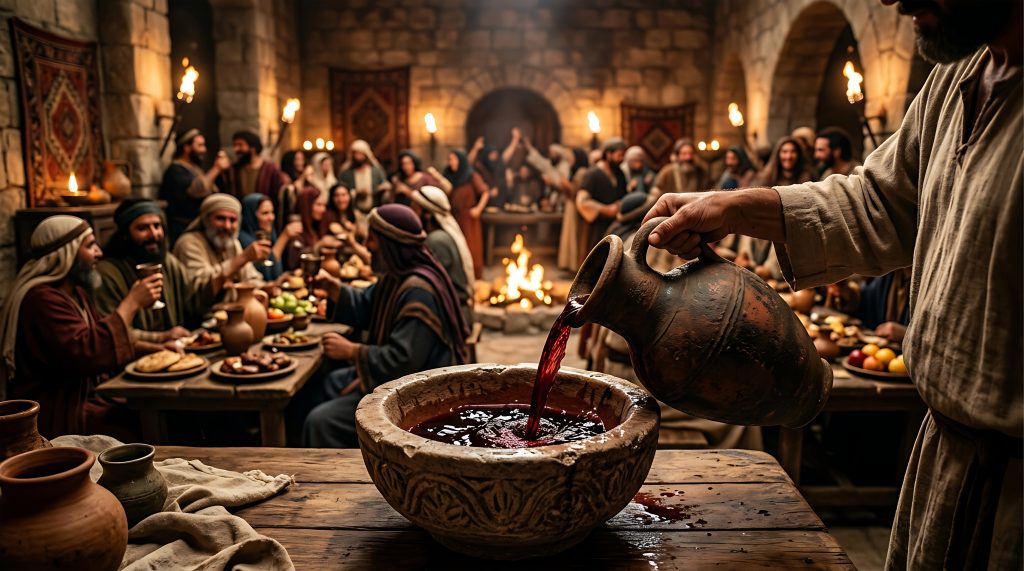
There were three fall festivals, all of which occurred in the seventh month of the year (Hebrew Tishri, October), linking this month with the seventh day of creation and the Sabbath, the seventh year reprieve of the land, and the Jubilee year (seven times seven = 49). First was the Feast of Trumpets, celebrated on the first day of this month, where the shofar was sounded, most likely to call Israel to prayer, sacrifice, and fasting for rain and an abundance of crops for the coming year (so Milgrom). The Day of Atonement, which we discussed in the above post The Annual House Cleaning: Leviticus 16, was observed on the tenth day. The Last festival, the Feast of Booths, was a pilgrimage feast which began on the fifteenth day of the month, where the Hebrews set up booths around Jerusalem and lived in them for seven days. It celebrated the fall ingathering of grapes and the vintage harvest.
It is critical here to understand that, unlike pagan festivals where worshippers lost themselves in myth and magic, Israel’s feasts were oriented toward God, the Lord of their land and its harvest. The Hebrews lived close to the earth and its cycle of seasons through their feasts, trusting Him for their food, and giving thanks to His provision with great joy. These festivals also oriented the Hebrews to their past, transporting them through time to that great moment of their redemption from Egypt, uniting them and all generations through the ages to that one original event.
In these feasts we see the outlines of what will become the great festivals of the Church. Passover brings together Holy Thursday and Good Friday. Easter is connected to the Feast of Unleavened Bread and the Ingathering of the Firstfruits where the first sheaf represents the resurrected Christ. Pentecost transfers directly to the Holy Spirit and the harvest of souls. The Fall feasts bringing the old year to an end and bringing in the new year (rō′š hašānâ). The more somber Day of Atonement, links up to Advent, a penitential season which begins the new year in prayer and fasting in anticipation of Christmas. Like the Hebrew feasts, the Church’s feasts are both linked to the cycle of nature, and to the past, transporting us back to the central sacrificial act of all time in Christ, and into the future of Heaven to the great Marriage Supper of the Lamb in the Eucharist. Each yearly cycle, if experienced with intentionality, deepens our faith and understanding of Christ and salvation.
Takeaway: Scripture embraces, through its festivals, both linear time and cyclical time as real and essential to our physical and spiritual wellbeing.
Questions:
- Have you reflected much about time and how you experience it in your day to day experience? Why or why not? Explain.
- Most moderns live purely in linear time, or secular time, without any notion of the past or the future. Can you see what consequences this may bring?
- How engaged are you with the Church’s liturgical calendar? Explain.
Resources Used:
Eliade, Mircea. The Sacred and the Profane: The Nature of Religion. English ed. Harcourt, Brace, & World, Inc. 1959. The above presentation of sacred and profane time draws from this book.
Milgrom, J. Leviticus.
Wenham, G. The book of Leviticus.