It is a profound mystery why we are what we are and why we do what we do in this life. Somewhere in the depths of our spirit, the innermost core of our being, we believe what we believe, and choose to act on what we believe. Our actions make visible what lies hidden in our secret interior. Here, in a crucial place near the end of Leviticus, God lays before Israel the two paths; the path of obedience and blessing, and the path of disobedience and curses. It is clear God is appealing to the spirit of His beloved people, both individually and as a nation, motivating them to take the path of obedience and blessing.
In doing so, He is showing great respect for their choice, with the desire to restore the lost Sabbath of the Seventh Day when God and humanity were to dwell together in harmony. This chapter is designed to establish equity between God and His people, and parallels the great Chapter 19, which, as we saw, was designed to establish equity between people. By “equity” is meant a just relationship of mutual respect where both parties fulfill their obligations. For responsibility is woven into all good and holy relationships on both ends.
The chapter begins with the prohibition of making idols and the command to keep the Sabbath, with the injunction to reverence the sanctuary. The Sanctuary, made by YHWH’s direction and designed from the vision of heaven given to Moses, is the source of all holiness. It is the place of YHWH’s special presence, where heaven meets earth, and where worship through sacrifice transpires. From it emanates holiness through moral conduct, both the central concept of loving neighbor and stranger as oneself, and sexual behavior. The sanctuary must be revered according to law, or holiness would be cut off from its the source.
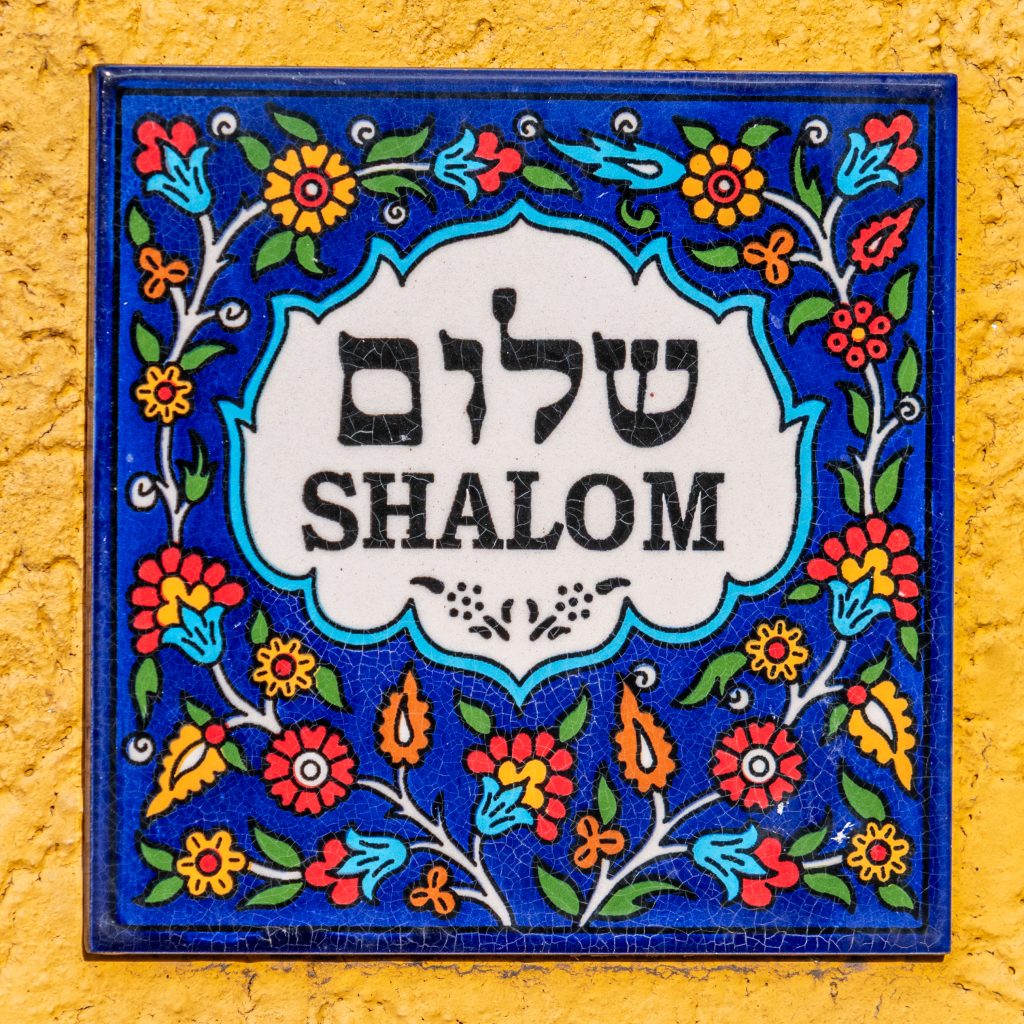
Then come the blessings for obedience (vv. 3-13). The key word here is “peace” (v. 6, šalȏm), a word associated with “rest” in the Hebrew mind, a creation word. What YHWH is doing here with Israel is bringing them out of chaos, to order, to rest as at creation. (See post Day Seven: The Great Enthronement of God in His Holy Temple, under Genesis 2.) What does Shalom and rest look like? A few general images suffice the legist; productive crops, victory over enemies, removal of dangerous beasts, and fertility. It all comes together with YHWH’s desire to make His abode with them (v. 11) punctuated with imagery of Him walking among them, and what we have called the “covenant formula; “[I] will be your God, and you shall be my people.” It is finalized by the reminder that YHWH delivered Israel from slavery in Egypt, and broke off the bars of their yoke, that they may walk with dignity and freedom.
The curses for disobedience follow in five sets (vv. 14-39). First comes illness, famine, and defeat. Second comes draught and poor harvests. Third comes dangerous beasts. Fourth comes war, pestilence and famine. The fifth brings the climax of disobedience, the opposite of the covenant formula: YHWH abandons His land and people to unspeakable horrors and exiles His people. Such exile takes us back to the exile of our first parents from the Garden in Eden.
One might ask, why are there only 10 verses describing the blessings of paradise in rather general detail, and 25 verses describing the curses of disobedience in very graphic detail? The answer lies in the human heart and what motivates it. The promise of paradise on earth, and heaven in the next life, always seems so remote to the sinful soul. The sinful soul is more motivated by terrible threats to its wellbeing, for the world as it is commonly experienced is naturally more immediate and real than the transcendent God and His promises. Paradise is for those who believe and are obedient, but even they are motivated to avoid God’s curses.
The idea of exile is a potent one in Israel. As we said above, it begins with the expulsion of our first parents, who became wanderers, exiles far from their original home. Consequently, the whole human race, is lost and its condition is described as an exile. In the ancient world, and indeed, even in today’s world, the threat of peoples being annihilated and/or driven from their ancestral land was/is always an ever present reality. So this prophecy of Israel being driven off their land into exile was something that accompanied them from the very beginning.
Yet YHWH will never let chaos win in the end. If, when Israel comes to its senses, and repents, YHWH will “remember,” His covenant with their fathers and with the land, that is, will honor it. No mention is made here of the prophetic concept of “ingathering” the exiled here from the nations, bringing them back to the land, but this is most naturally a part of YHWH’s remembering.
Caesarius of Arles demonstrates how the blessings of this chapter are fulfilled in Christ and His Church.
If we faithfully and diligently pay attention to it, brethren, everything which was promised corporally to the Jews is fulfilled spiritually in us; for all the blessings of God which they received on earth we have obtained in our souls through the grace of baptism. Therefore, with his help, let us labor with all our strength so that we may be able to receive God’s blessings and avoid his curses.
Sermon 105.1
The promise of “you shall eat your bread to the full” (v. 5) is the Church’s experience of Christ in the Eucharist. The peace promised here is fulfilled in Jesus’ words, “Peace I leave with you, my peace I give to you; not as the world gives peace do I give to you.” For St. Caesarius, the promise of ridding the land of dangerous beasts symbolizes Christ’s protection, ridding us from the devils within and without us.
Takeaway: In this chapter, near to the conclusion of Leviticus, YHWH attempts to motivate His people toward obedience and blessing, but also by the threat of chaos.
Questions:
- Have you ever thought much about who you are and why you do the things you do? If yes, explain, if not, why?
- What primarily motivates you, the promise of blessing or the threat of the curse. Explain.
- Do you feel you are a child of blessing? If so, what does this look like for you?
Resources Used: ACCS vol. III, pp. 200ff.