Yet I will make Pharaoh so headstrong that, despite the many signs and wonders that I work in the land of Egypt, Pharaoh will not listen to you. Therefore I will lay my hand on Egypt and with mighty acts of judgment I will bring my armies, my people the Israelites, out of the land of Egypt. All Egyptians will know that I am the LORD, when I stretch out my hand against Egypt and bring the Israelites out of their midst. Exodus 7:3-5
The actual battle begins with a skirmish that at first might remind us of a magical contest. Aaron throws Moses’ staff before Pharaoh, and it became a serpent. Again, we imagine this serpent to be a Cobra representing Pharaoh’s power. (See previous post Taking the Cobra by the Tail, and the Uraeus in Pharaoh’s crown). The Egyptian magicians somehow could manage this as well, but Aaron’s rod swallowed them up. This is a bad omen, and Pharaoh should have picked up on this, but could not, for his heart was hardened. It is a prophetic sign that YHWH will swallow Egypt up, which in fact happens at the Red Sea.
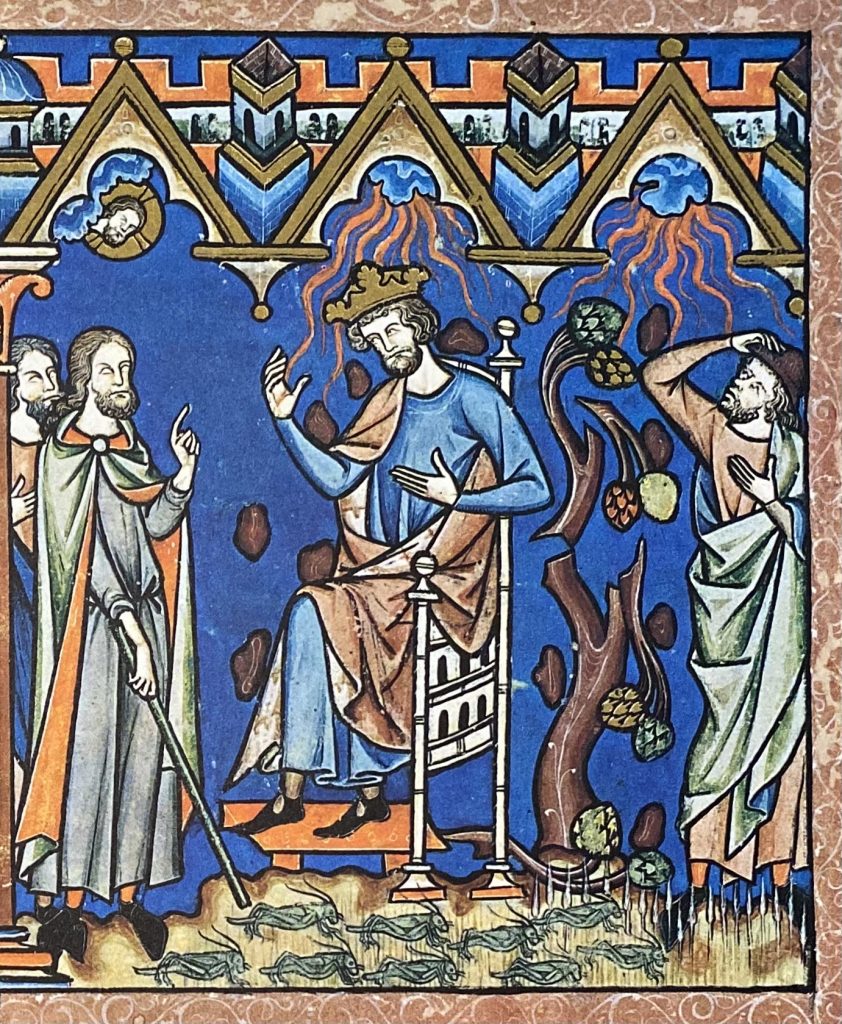
There are three stages of three plagues, each stage intensifying, concluding with the worst of all, the Death Angel. In the first stage the Nile is turned to blood (7:20 24), the plague of frogs (8:1 7), and the gnats (8:16 19). Note that the magicians could imitate plagues one and two, as well as the serpents (7:11 13) with their sophisticated dark arts, but could not imitate the third plague (“This is the hand of God,” 8:19). In the second stage there are the plague of flies (8:20 24), the death of Egypt’s livestock (9:1 7), and the boils (9:8 12). Note the distinction made between Israel and Egypt at this stage (8:22). Also, after this stage the magicians could not even stand before Moses because of the boils (9:11). In the third stage there are the plagues of hail (9:22 26), locusts (10:12 20), concluding with the ninth plague of thick darkness (10:21 29). It is important to notice that the magicians are not even mentioned now. Also, in some way there was intensification, for God’s power was “unrestrained” at this stage (9:14).
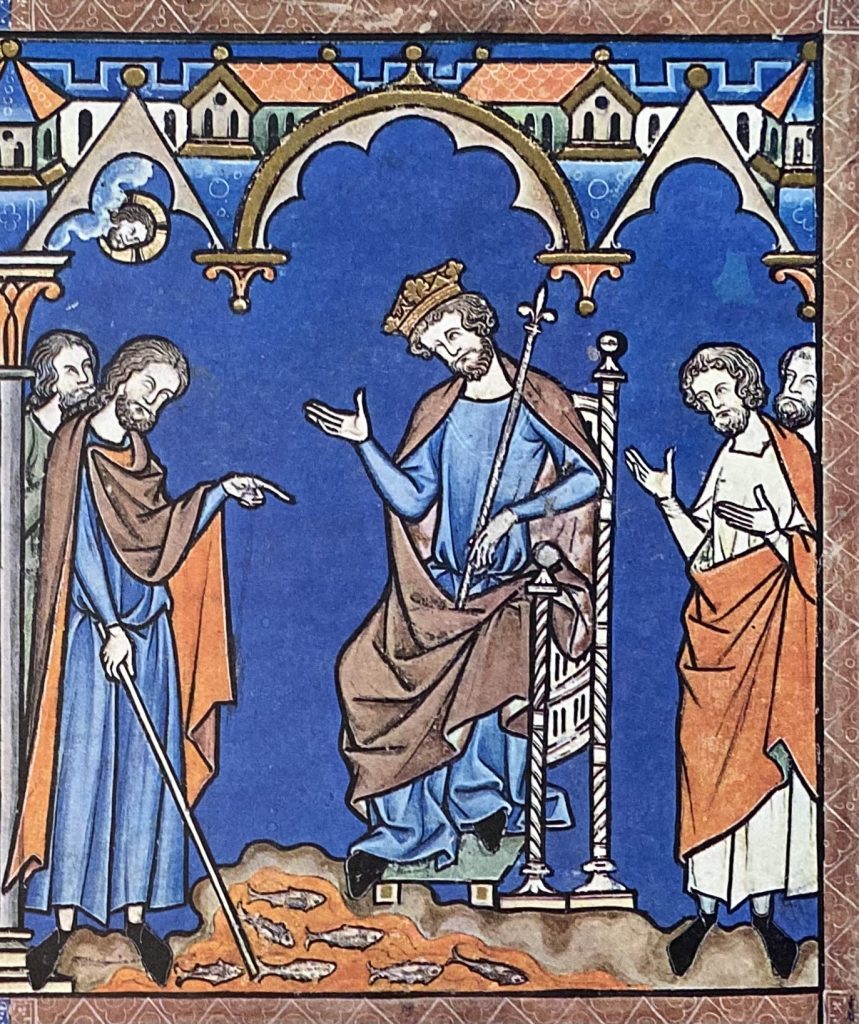
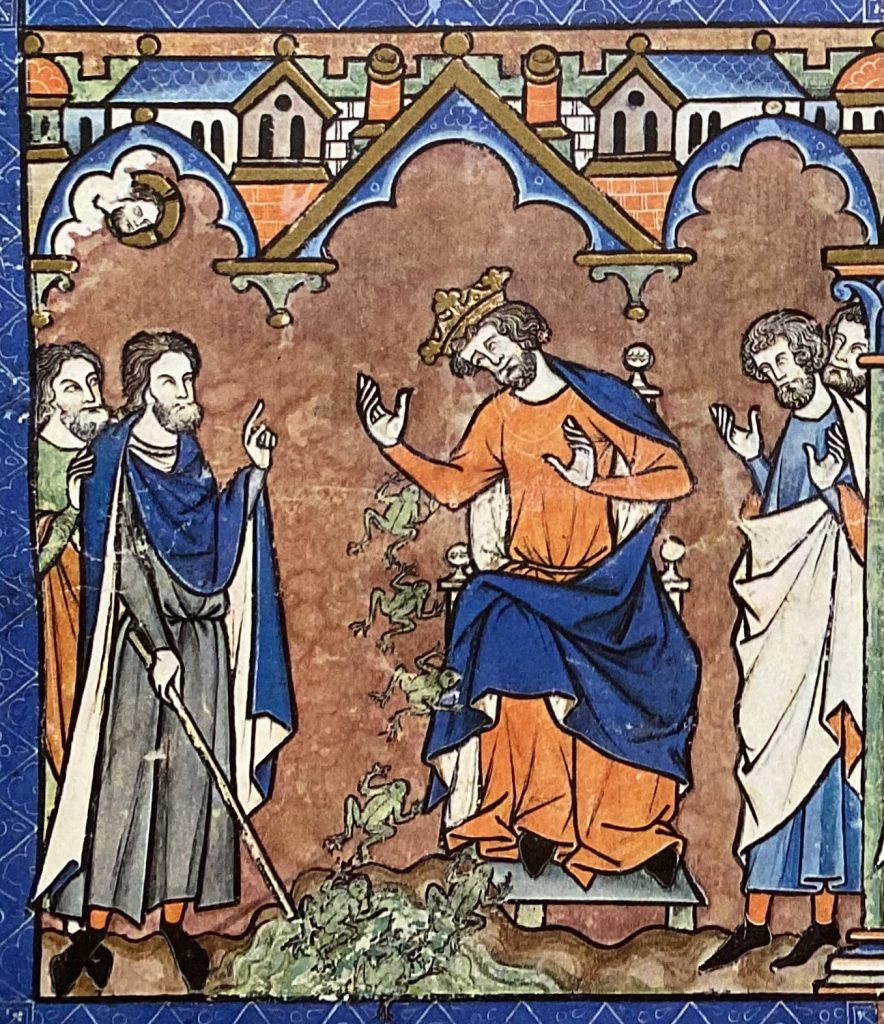
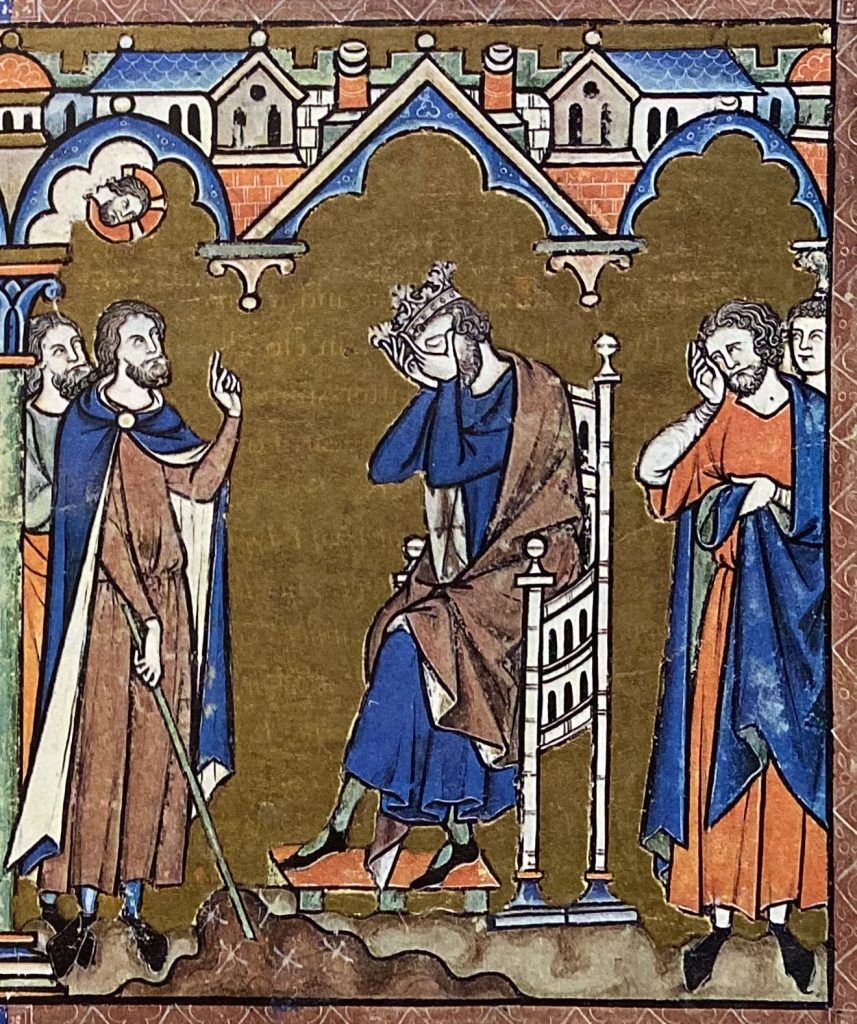
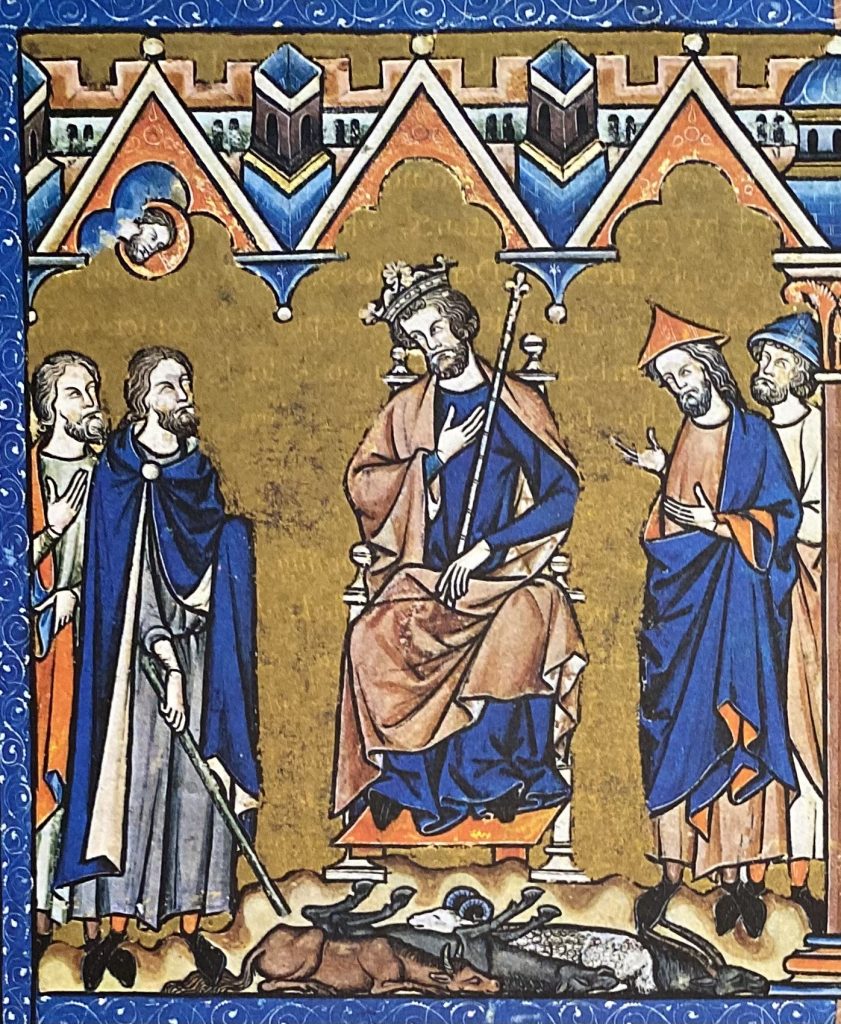
What is happening with the magicians is significant. They could duplicate snakes (7:12) and plagues 1 (water to blood) and 2 (frogs), but could not produce gnats, so they declare, “This is the finger of God” (8:19). After the second stage, they could not even stand before Moses because of the boils. They are not even mentioned after the 3rd stage. YHWH is not only warring against Pharaoh (parental battle), but is putting to shame pagan magic in the heart of Egypt, the land of the occult par excellence. It is not even portrayed as a magic contest, for YHWH and Moses transcend magic. It is a “no contest;” the battle is prolonged merely to show off God’s power over what in that day and age was considered ultimate power, Pharaoh and Egypt. In the Hebrew world view, all power is God’s power, and any power the magicians could tap into is ultimately “on loan,” so to speak.
The ninth and last plague of the three sets of three, deep darkness, is significant as well. One might think that one of the previous plagues, such as boils, would be worse. However, this darkness was unnatural; the Hebrew wording in 10:21, 22 implies an unnatural darkness, a return, so to speak, to the pre-created state where “darkness was over the face of the deep” (Gen. 1:2). It was felt that the natural order and bounds of creation, day and night, were altered, and therefore inspired terror. This is of special import to the Egyptians, for their sky is perpetually clear by day (clouds and storms extremely rare), for Re the sun god (symbolized by the beetle [scarab]), daily drove across it in triumph. Re was the highest god in the Egyptian pantheon, and Pharaoh was Re’s manifestation on earth.
The tenth plague is set apart from the three sets of three because the battle is portrayed fundamentally as a parental battle (4:21-22). YHWH is fighting for his firstborn, and Pharaoh, the god of Egypt, fighting for his dynasty (firstborn). The basic issue involved here is, who is God, YHWH or Pharaoh? The Magicians knew it after the 3rd plague, the servants after the 8th plague and Pharaoh after the 10th (12:31-32). Note the forced submission of this god-king after the 4th, 7th, and 8th plagues; Pharaoh is reduced to beg for intercession with his last words, “and bless me also” (12:32).
YHWH turns the gods of Egypt against the Egyptians in His warfare. It begins with the very source of Egyptian life by assaulting the Nile and its god Hapi. Frogs are amphibians and therefore ambiguous, belonging to both land and water, mysteriously linked to fertility, represented in Heqet, goddess of birth, fertility and regeneration. Livestock, especially the bull-headed god Apis, famously linked to the golden calf, was worshipped in Memphis. It concludes with the sun God Re. Therefore, this is a judgment against the pagan world view that worships nature. YHWH proves His identity in that “all will know that He is YHWH” and that there is no god like Him (5:2, 6:7, 7:5, 17, 8:10, 22, and esp. 9:14, 29, 10:2).
Takeaway: God wars against the “gods” of Egypt with His strange and wonderful weapons, the plagues, and therefore displays Himself as the true God over all gods, beginning with the Nile, the source of life for Egypt, and ending with the darkening of the sun god Re, and by extension Pharaoh, the incarnation of Re.
Questions: We can set up “gods” in the face of God, even though they are not pagan deities. 1) How do we do this? 2) Do we ever get the sense of God “waring” against our “gods?” What does this look like in our day to day lives?