Then the Lord said, “I have seen the affliction of my people who are in Egypt, and have heard their cry because of their task masters; I know their sufferings, and I have come down to deliver them out of the hand of the Egyptians, and to bring them up out of that land to a good and broad land, a land flowing with milk and honey … And now, behold, the cry of the sons of Israel has come to me, and I have seen the oppression with which the Egyptians oppress them. Exodus 3:7-9

It was not Israel’s fault that they went down to Egypt, that dark occult land. It was by God’s plan that they went; it could not be avoided. Moreover, according to the prophecy to Abraham, it was by divine design that they become slaves and oppressed there for four hundred years (Gen.15:13). When we step back and consider the misery which God’s plan brought upon His people, we are astounded, and perhaps even appalled. Think of the generations lost to all hope, their women and daughters abused, men and boys mercilessly driven by the whip, their lives counting for nothing to their tormentors. We know that in time they lost all memory of their God, the God of their fathers. Ignorant, uneducated, they easily lost moral sensitivities, and fell into the paganism around them. How this could be the will of God for them cannot be accounted for by human reason. It seems that if God does have a design, it turns like some galactic wheel that randomly crushes countless hapless souls along its unfathomable way.
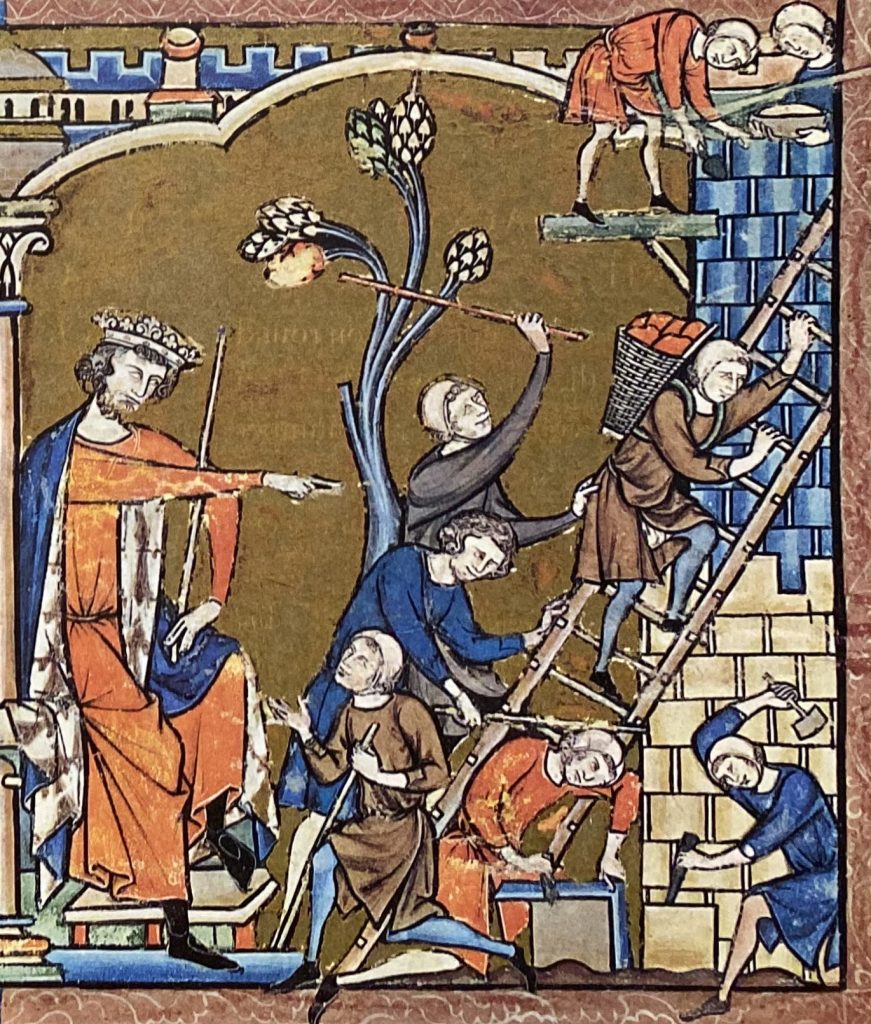
Then God suddenly breaks into space and time with “I have surely seen (emphatic in Hebrew) the affliction of my people who are in Egypt, and have heard their cry because of their taskmasters; I know their sufferings…” (Ex. 3:7). We are struck by the unaffected divine expression of words and phrases. There is no attempt to explain the past. All there is now is the urgent present. Indeed, that is all any of us have, even when God is silent for vast swaths of time when nothing good seems to be happening. God sees, hears, and knows it all, all along the way. A soul that disposes itself towards God will embrace this in the face of the inexplicable. This is exactly what God expects of Moses and His people. Nothing has changed since this timeless ancient text; God expects this from us all.
That God expects us to believe and understand that He sees, hears, and knows us in our afflictions individually and as a human race is an astounding thought. Pagan gods do not speak this sort of language. They were aloof to human concerns in the main, unless something about the human drama concerned them. The best one could expect was to devote oneself to the nature gods with whom one has to deal, resort to magic, and thrash around in life the best one could.
Today’s complex post-Christian cultures do not fare any better with this. Since Voltaire mocked the idea that God sees, hears, and knows our affliction in his famous parody Candide, written in 1759 in light of the great earthquake that destroyed Lisbon, the western world trembles before suffering as if it has the ultimate word. In light of suffering, God is either all-powerful and therefore evil to allow it, or He is not all-powerful and too weak to do anything about it, or does not exist at all. Like the pagans of old, we are left to ourselves to survive the best we can.
Voltaire would be right but for one miscalculation. In spite of God’s incomprehensible ways, God still encounters humanity in myriads of ways like He did to Moses at the bush, keeping the flame in our internal sanctuaries burning. As with Moses, once we experience encounter, we know that we know God and that He is more real than anything our senses and reason can reveal to us. Many times it seems that we stand in this naked faith against the howling and icy winds of doubt, but stand we do. When we do, we see that God has been intimate with us and our afflictions all along, both those which we brought upon ourselves, and those that fell upon us by divine providence. We cannot see how God was present with those Hebrew slaves that suffered so badly over those four hundred years. All we have are those timeless words, “I have seen the affliction of my people…” It is no small thing to be seen, heard, and known by God.
In the grand scheme of things, the Hebrews were in a better place than their Egyptian overlords, as St. Ambrose reflects:
Hence, the Hebrews, who groaned in the works of Egypt, attained the grace of the just, and those “who ate bread with mourning and fear” were supplied with spiritual good (I Cor. 10:3). The Egyptians, on the other hand, who in their vice to a detestable king, carried out such works with joy, received no favor.
On Paradise, 15.75
Takeaway: God’s covenant people will suffer in this life, along with the rest of the human race, but live in the confidence that God sees, hears, and knows them in their suffering, and that He will deliver them.
Questions: 1. The technical term for the problem of evil/suffering in light of the existence of God is “theodicy.” How would you go about explaining the problem of evil and suffering to your jaded and skeptical friends and acquaintances in your secular culture? 2. How have you worked through the suffering that God has allowed to fall upon you?
Resources Used:
ACCS, pp. 8f.
Voltaire, Candide. Many editions.